
Vertical vs articulated aerial work platforms: structural differences
Key structural differences between vertical aerial work platforms and articulating boom lifts: design, applications and components
Aerial work platforms are essential equipment for working at height across a wide range of industries, including construction, industrial maintenance, logistics and plant engineering. However, not all machines are designed to meet the same operational requirements. Choosing between a vertical aerial work platform and an articulating boom lift requires careful consideration of factors such as mechanical design, movement capabilities, working space, manoeuvrability and intended application.
Vertical aerial work platforms, often referred to as scissor lifts or compact self-propelled vertical platforms, are designed to operate in confined spaces and provide straight vertical elevation. Articulating boom lifts, on the other hand, offer greater flexibility thanks to articulated boom systems that extend and rotate, allowing operators to reach difficult access points, work over obstacles and operate effectively in more complex environments. Understanding the structural differences between these two types of aerial work platforms is essential not only for selecting the most suitable solution for a specific application, but also for assessing the quality, reliability and safety of the structural components that determine their overall performance.
Let’s see the key differences between vertical aerial work platforms and articulating boom lifts, exploring their structural design, components, typical applications and suitability for different working environments.
Features of vertical aerial work platforms
A vertical aerial work platform is designed to provide straight vertical lifting, keeping the platform aligned directly above the machine’s base throughout the entire lifting cycle. This configuration enables operators to work safely in confined spaces where precise vertical movement is required. This category includes several types of machines, most notably scissor lifts, which feature a mechanical structure made up of interlinked cross braces that extend progressively as the platform is raised. The lifting motion is powered by hydraulic or electro-hydraulic systems that operate the scissor mechanism, allowing the platform to reach significant working heights while maintaining excellent stability and a compact footprint.
Vertical aerial work platforms are available in both stationary and self-propelled configurations. A self-propelled vertical aerial work platform incorporates a drive system that allows the operator to reposition the machine directly from the platform, reducing downtime between tasks and improving overall operational efficiency.
These platforms are commonly used in:
- logistics warehouses;
- shopping centres;
- industrial facilities;
- indoor maintenance operations;
- plant and equipment installation;
- order picking and warehouse shelving management.
From a structural perspective, vertical aerial work platforms require components that deliver outstanding stability, low weight, precise movement and long-term durability under continuous operating cycles. Frames, supports, welded structures and mechanical components must therefore be engineered to the highest quality standards and manufactured from high-strength materials to ensure reliable performance and long service life.
Articulating boom lifts for complex construction sites
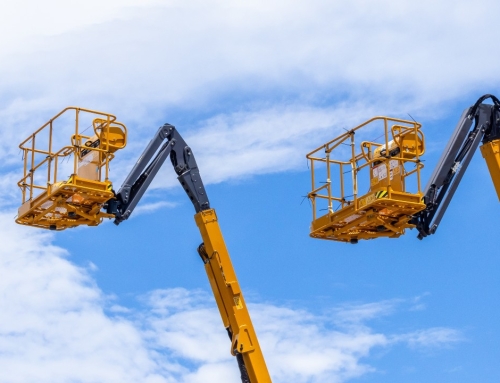
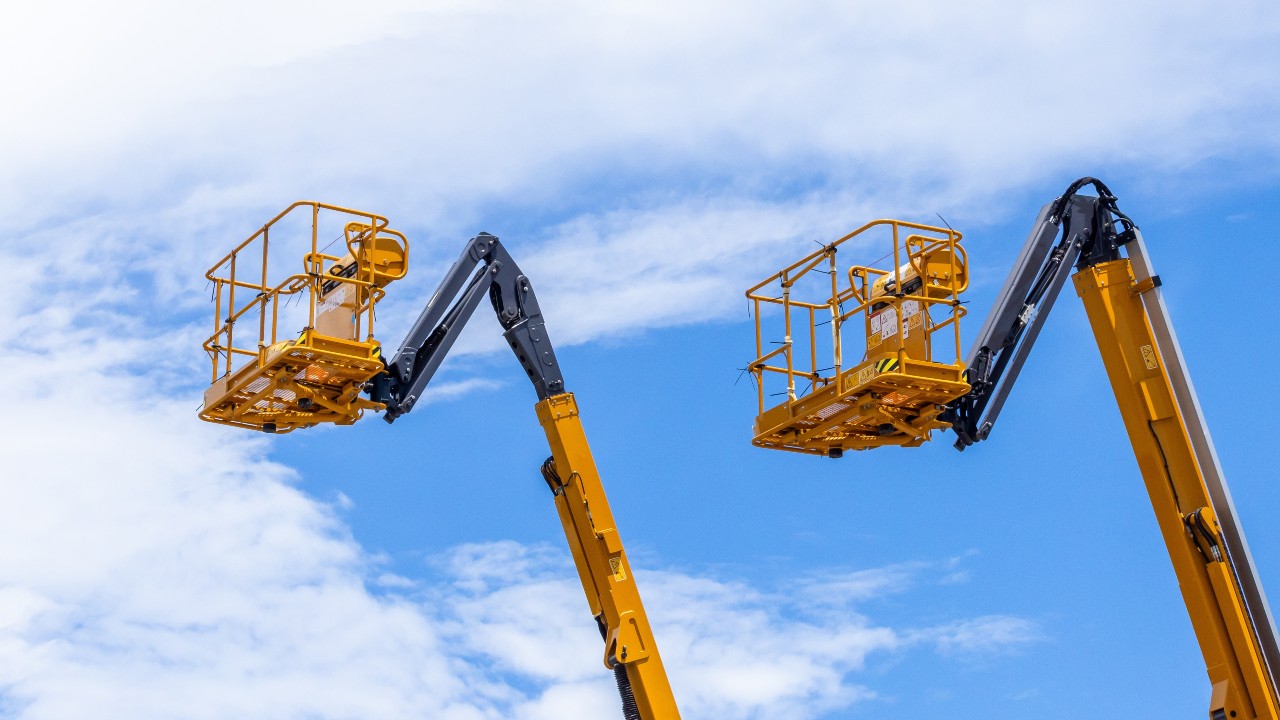
An articulating boom lift is designed to provide greater freedom of movement than a vertical aerial work platform. It operates through a system of multiple boom sections connected by mechanical joints, hydraulic cylinders and rotating mechanisms, allowing the platform to move in a wide range of directions.
Unlike a vertical aerial work platform, which moves primarily upwards, an articulating boom lift combines working height, horizontal outreach and the ability to work over obstacles. This enables operators to access areas that are not directly above the machine’s base, such as building façades, rooftops, plant equipment, steel structures or locations beyond physical obstructions.
The articulated boom can move in several directions, allowing the platform to be positioned accurately even in the most challenging environments. This makes articulating boom lifts particularly well suited to outdoor construction sites, industrial maintenance, building maintenance, infrastructure projects and applications where obstacles at height need to be overcome.
From a structural perspective, these machines are considerably more complex than vertical aerial work platforms. The articulated boom must withstand variable loads, torsional forces, vibrations and dynamic stresses that change according to the boom’s extension, angle and the position of the platform. As a result, the design of each component demands exceptional attention to both mechanical strength and dimensional accuracy.
Plates, pivot joints, supports, frames, boom sections and welded structures must all be manufactured to deliver reliable performance, even under the most demanding operating conditions. In this type of machine, the quality of the structural steel fabrication plays a critical role in ensuring stability, safety and precise control throughout every stage of operation.
Differences between vertical aerial work platforms and articulating boom lifts: structure and operation
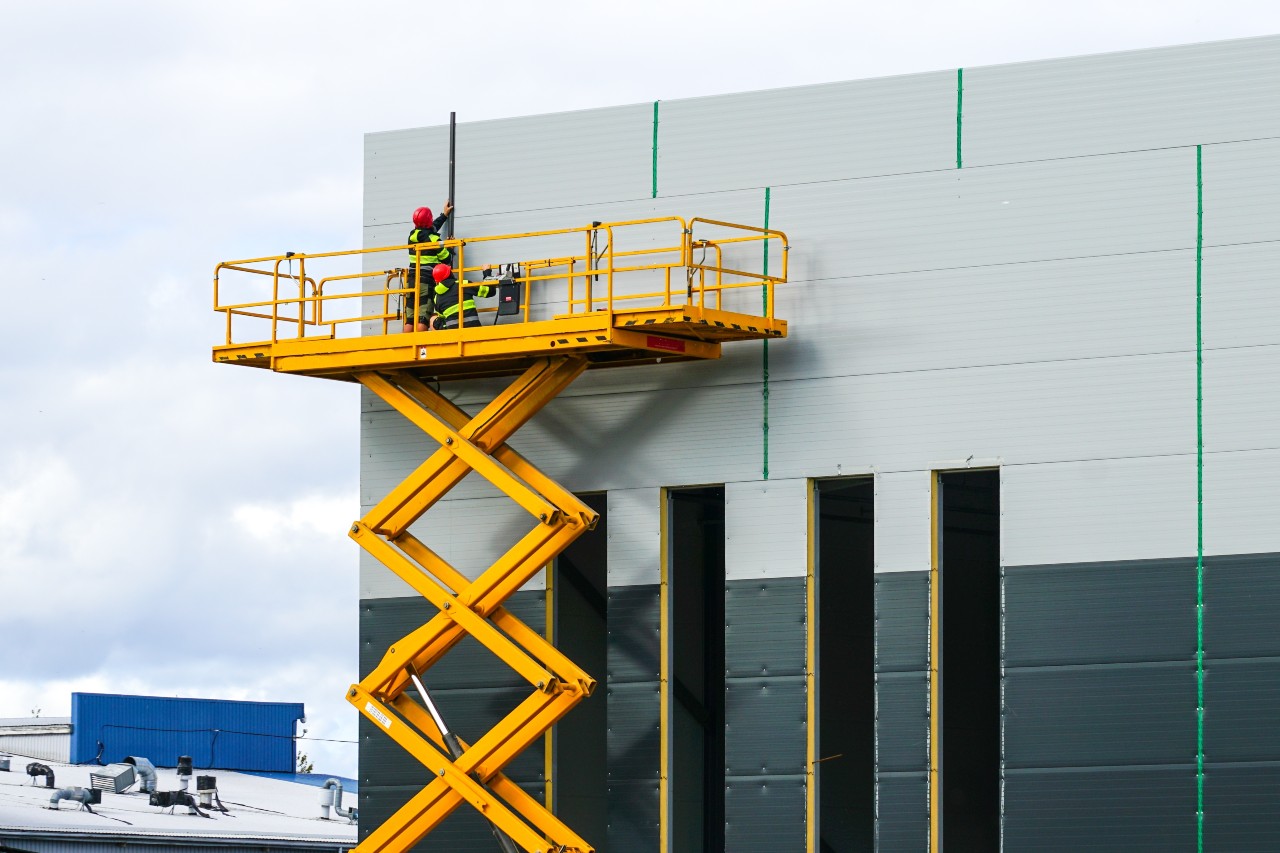 The main differences between a vertical aerial work platform and an articulating boom lift lie in the way each machine reaches the required working height. A vertical aerial work platform moves straight upwards, while an articulating boom lift uses a system of articulated boom sections that provides a much greater range of movement and flexibility.
A vertical aerial work platform is the ideal choice for tasks carried out in confined spaces, on level surfaces and where the work area can be accessed directly from below. It is widely used for indoor maintenance, plant installation, warehouse operations, electrical installations, shelving maintenance and other applications that require stable vertical access within a compact footprint.
An articulating boom lift, by contrast, is designed for situations where the work area cannot be reached directly from the machine’s base. Its articulated boom allows operators to work over obstacles, reach laterally beyond the machine and access difficult or obstructed locations. This makes it particularly suitable for outdoor construction sites, façade maintenance, industrial plants, infrastructure projects and other complex working environments.
The two types of machine also differ in terms of overall dimensions and load distribution. Vertical aerial work platforms are generally more compact and lightweight, whereas articulating boom lifts require a more substantial chassis and components capable of withstanding higher mechanical stresses. In a vertical platform, loads are transferred primarily along the vertical axis. In an articulating boom lift, however, forces are distributed throughout the boom structure and vary according to the boom’s extension and the position of the platform.
These differences have a direct impact on component design. Vertical aerial work platforms require structures that combine stability, low weight and precision. Articulating boom lifts, on the other hand, rely on more robust components capable of resisting torsional forces, dynamic loads and multi-directional movements. In both cases, the overall safety and reliability of the machine depend on the quality of the materials, welding processes and precision engineering used throughout its construction.
Structural components for aerial work platforms and safety requirements
Structural components play a crucial role in the safety, reliability and service life of aerial work platforms. Every element – from the chassis and supports to steel plates and welded structures – contributes to the machine’s overall stability and to the correct distribution of loads during lifting, manoeuvring and working at height.
In vertical aerial work platforms, components must provide maximum stability throughout the lifting and lowering cycle. Whether the lifting system is based on a scissor mechanism, telescopic mast or vertical column, the structure is subjected to repeated loading and unloading cycles. For this reason, chassis, guide rails, pivot joints, pins and connection points must be manufactured from high-strength materials and engineered with precision to ensure consistent performance over time.
In articulating boom lifts, the structural demands are even greater. The articulated boom is subjected to continuously changing loads depending on its extension, working angle and the position of the platform. Steel plates, supports, welded assemblies and mechanical components must therefore withstand not only vertical loads but also torsional forces, bending stresses and dynamic loading. Dimensional accuracy is essential to ensure the correct fit between components and smooth, reliable boom movement.
Safety also depends on the quality of the materials used and the control of the manufacturing process. Structural steels, high-strength steel plates, certified welding procedures and rigorous dimensional inspections all contribute to producing reliable components that meet the requirements of aerial work platform manufacturers. In addition, the design and manufacture of these components must comply with the relevant industry standards and safety regulations governing machines designed for working at height, ensuring structural integrity, stability and reliable performance even in the most demanding applications.
Every stage of production must be carefully controlled, as even the smallest dimensional deviation can affect the machine’s stability or reduce the service life of a component. For this reason, it is essential to work with suppliers capable of manufacturing robust, reliable and certified components, developed in accordance with precise technical specifications. A high-quality structural component is far more than a fabricated steel part – it is a fundamental element in ensuring the overall safety, reliability and operational performance of an aerial work platform.
Certified components by Ferrero Industrial: tailor-made solutions for vertical aerial work platforms and articulating boom lifts
In the aerial work platform industry, the ability to manufacture bespoke components is a key advantage for OEMs seeking reliable, safe and fully integrated solutions for their machines. Every aerial work platform has its own specific requirements in terms of working height, load capacity, platform size, boom geometry and operating conditions, making the customisation of structural components essential.
At Ferrero Industrial, we manufacture certified components for aerial work platforms, supplying tailored solutions developed to meet each customer’s technical and production requirements. Our expertise includes the production of structural steel fabrications, steel plates, supports, chassis, mechanical components and welded assemblies for vertical aerial work platforms, scissor lifts and articulating boom lifts, while maintaining the highest quality standards throughout every stage of the manufacturing process.
The quality of a structural component depends not only on the choice of materials but also on the precision of the manufacturing processes and the reliability of production controls. For this reason, we employ advanced technologies for laser cutting, bending, welding and dimensional inspection, ensuring exceptional accuracy in the manufacture of both individual metal components and fully assembled structures.
Particular attention is given to welding operations and quality assurance. In components designed for aerial work platforms, even the smallest dimensional variation or structural imperfection can affect machine performance and operational safety. Comprehensive quality inspections carried out throughout the manufacturing process ensure that every component is reliable, repeatable and fully compliant with the technical specifications required by equipment manufacturers.
Our ability to develop bespoke solutions also enables us to adapt components to the different configurations of aerial work platforms, optimising weight, structural strength and mechanical integration. This is especially important for articulating boom lifts, where structures must withstand dynamic loads and constantly changing stresses, but it is equally valuable for vertical aerial work platforms, where compact design, stability and precise movement are essential.
With extensive expertise in custom metal fabrication and structural steel engineering, Ferrero Industrial is a trusted technical partner for manufacturers looking for robust, certified and custom-engineered components designed to meet the specific requirements of their aerial work platform projects.
FAQs – Frequently asked questions about aerial work platform components and technical requirements
What are the key requirements for a structural component used in aerial work platforms?
A structural component for an aerial work platform must deliver high mechanical strength, dimensional accuracy and long-term reliability. Chassis, supports, steel plates and welded assemblies must be designed to withstand static and dynamic loads, vibrations and continuous operating cycles while ensuring the machine remains stable and safe throughout its service life.
Why is structural steel fabrication so important for aerial work platforms?
Structural steel fabrication has a direct impact on the stability and safety of an aerial work platform. The quality of the welds, the precision of the manufacturing processes and the strength of the materials all influence the machine’s performance during lifting and manoeuvring operations. Well-engineered structural components improve reliability, durability and overall operational performance.
Which manufacturing processes are required to produce components for aerial work platforms?
Manufacturing components for aerial work platforms requires high-precision processes such as laser cutting, press braking, welding, assembly and dimensional inspection. Every stage of production must be carefully controlled to ensure that each component meets the technical specifications required by aerial work platform manufacturers.
What does it mean to manufacture bespoke components for aerial work platforms?
Manufacturing bespoke components means designing and producing structural parts tailored to the specific requirements of both the aerial work platform and its manufacturer. Dimensions, geometries, material thicknesses, load capacities and configurations can all vary depending on the intended application, making component customisation essential.
What are the benefits of working with a specialist supplier of aerial work platform components?
A specialist supplier can support manufacturers by delivering reliable, repeatable components that meet the exact requirements of each project. In addition to consistent production quality, specialist expertise in complex fabrication, quality assurance and technical customisation ensures components are suitable for a wide range of aerial work platform applications.
Does Ferrero Industrial manufacture components for different types of aerial work platforms?
Yes. Ferrero Industrial designs and manufactures structural components and fabricated steel assemblies for a wide range of aerial work platforms, including vertical aerial work platforms, scissor lifts and articulating boom lifts. Every solution is developed to meet the customer’s technical specifications and the requirements of the intended application.
How does welding quality affect the safety of aerial work platforms?
Welds are a critical element of the structural components used in aerial work platforms. High-quality welding contributes to the overall strength of the structure and ensures loads are distributed evenly throughout the machine. Rigorous quality inspections and controlled manufacturing processes help guarantee long-term reliability and consistent operational performance.
Why should manufacturers choose certified components for aerial work platforms?
Certified components provide greater assurance in terms of quality, safety and compliance with the standards required by the lifting equipment industry. For aerial work platform manufacturers, selecting components produced under controlled quality processes helps reduce operational risks while improving the overall reliability of the finished machine.
Looking for a trusted partner to manufacture certified components for aerial work platforms? Contact us for tailored technical advice. Our team is ready to help you develop bespoke solutions engineered to meet the specific requirements of your industry and application.